

 By Tyler
·
5 min read ·
Manufacturing, Quality, GMP and Testing
By Tyler
·
5 min read ·
Manufacturing, Quality, GMP and Testing
A cosmetic certificate of analysis, or COA, is a batch-specific quality document. It tells you what was tested, what specification was used, and what result the lab recorded for that batch.
It does not automatically prove that a product is stable, compatible with its packaging, or ready for every market. That is why the useful question is not, “Do you have a COA?” It is, “Does this COA match the batch I am buying, and does it cover the right risks?”
Here are the six fields to check before you accept it.
1. Product name and batch number
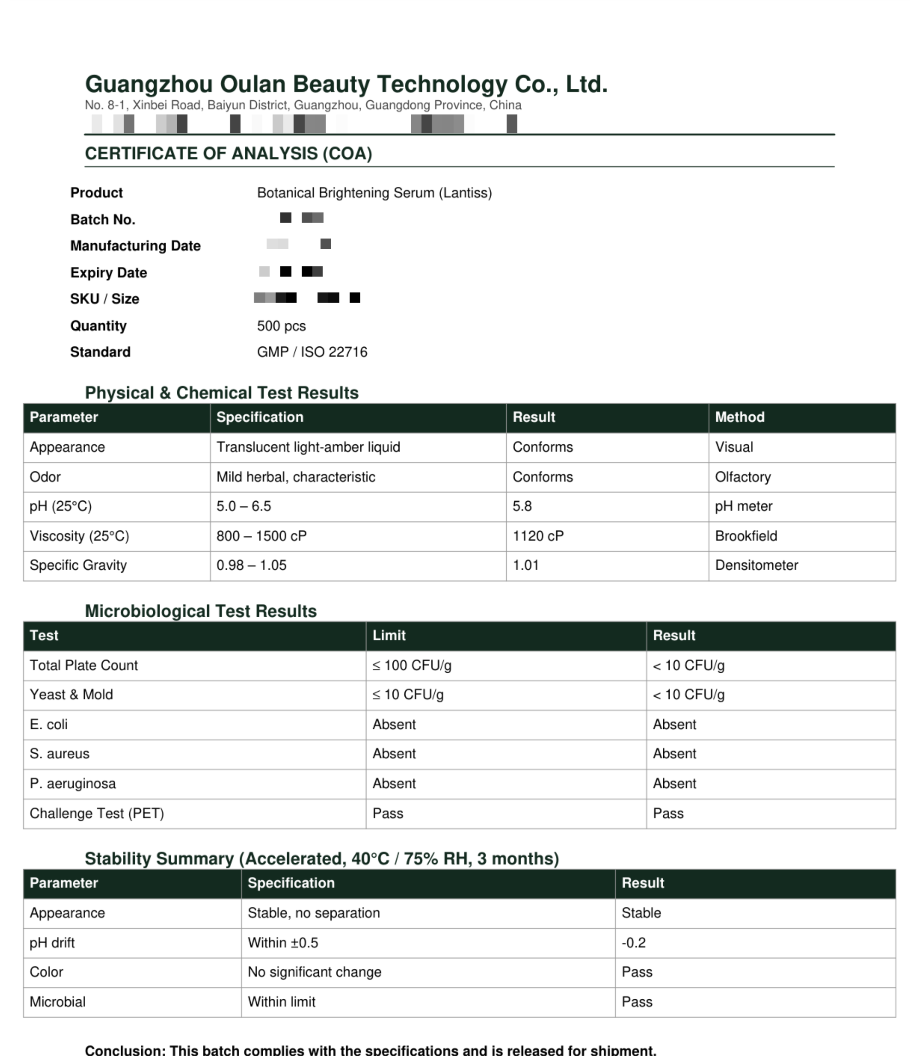
The COA has to connect to the exact batch you received.
Check the product name, specification, batch code, and production date against the order, carton label, inner box, and batch record. If the document only shows a generic product name, or the batch number does not appear anywhere on the shipment, the traceability is weak.
A COA is most useful when it answers one question clearly: can this document be tied to the batch sitting in my warehouse?
In 2024, I made a serious mistake here. We shipped two batches to a client. The testing lab did its job, but I mixed up the product names and batch records. The two COAs did not belong to the products in the shipment, and I sent them to the client without checking again. The client found the mistake.
We changed two things after that. Product names and batch records are now kept separately, and we review every COA ourselves before it leaves the office. We have not repeated that mistake since.
2. Test items
Common COA items include appearance, color, odor, pH, viscosity, specific gravity, microbiology, heavy metals, and marker compounds.
The right list depends on the product. A simple moisturizer and an acid-based exfoliant do not carry the same risk. A formula with a botanical extract may need different identity or marker checks than a basic emulsion.
Do not assume that a long list is automatically better. Ask whether the tests match the formula, the intended market, and the failure risks you care about. A missing test can be a problem, but an irrelevant test is not proof of quality either.
3. Specification range
A result without a specification is difficult to judge.
A useful COA shows the target range and the actual result together:
| Test | Specification | Result |
|---|---|---|
| pH | 5.0–6.0 | 5.4 |
| Viscosity | 20,000–30,000 cps | 24,800 cps |
| Appearance | White, uniform cream | Conforms |
| Microbiology | Within limit | Conforms |
The specification is the rule. The result is what happened in that batch. Read them together.
Passing a pH or viscosity range does not prove that the product will remain stable for its full shelf life. It only shows that the batch met that part of the specification at the time of testing.
4. Test result
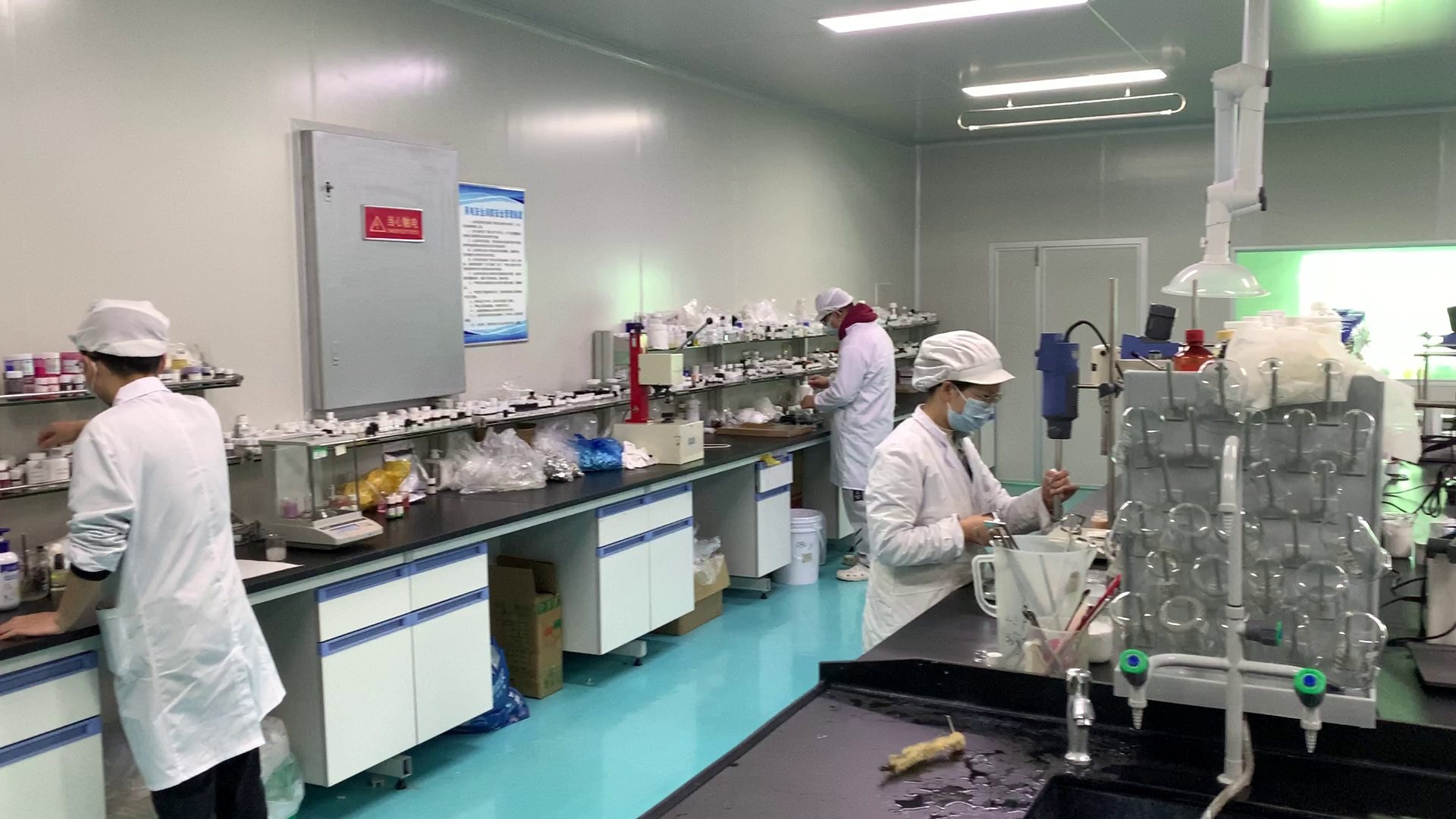
When you see “Pass,” look for the standard behind it.
Different labs, methods, and specifications can produce different conclusions. Check the units, decimal points, limits, and any out-of-specification notes. If a value is outside the range, ask what happened next: was it rejected, reworked, retested, or accepted under a documented deviation?
A COA from an earlier batch cannot automatically stand in for a newer one. Formula, supplier, process, or equipment changes can affect the result. Each shipment needs its own traceable record.
I have also seen COAs that looked complete but were reused from an earlier batch. The product name was changed, and sometimes the client name was changed, but the underlying product was not the same. The difference can be small on paper and still matter in the finished product.
5. Test method and date
Look for the method or standard used, the test date, the report number, and the laboratory name.
The test date matters. A report from an early development sample may not represent the final production batch. If the formula or process changed after that date, the old report cannot be treated as the final batch record.
Some brands only need an internal QC COA. Others need a third-party report for a retailer, platform, or customer audit. Those documents serve different purposes.
6. Issuing party and signature
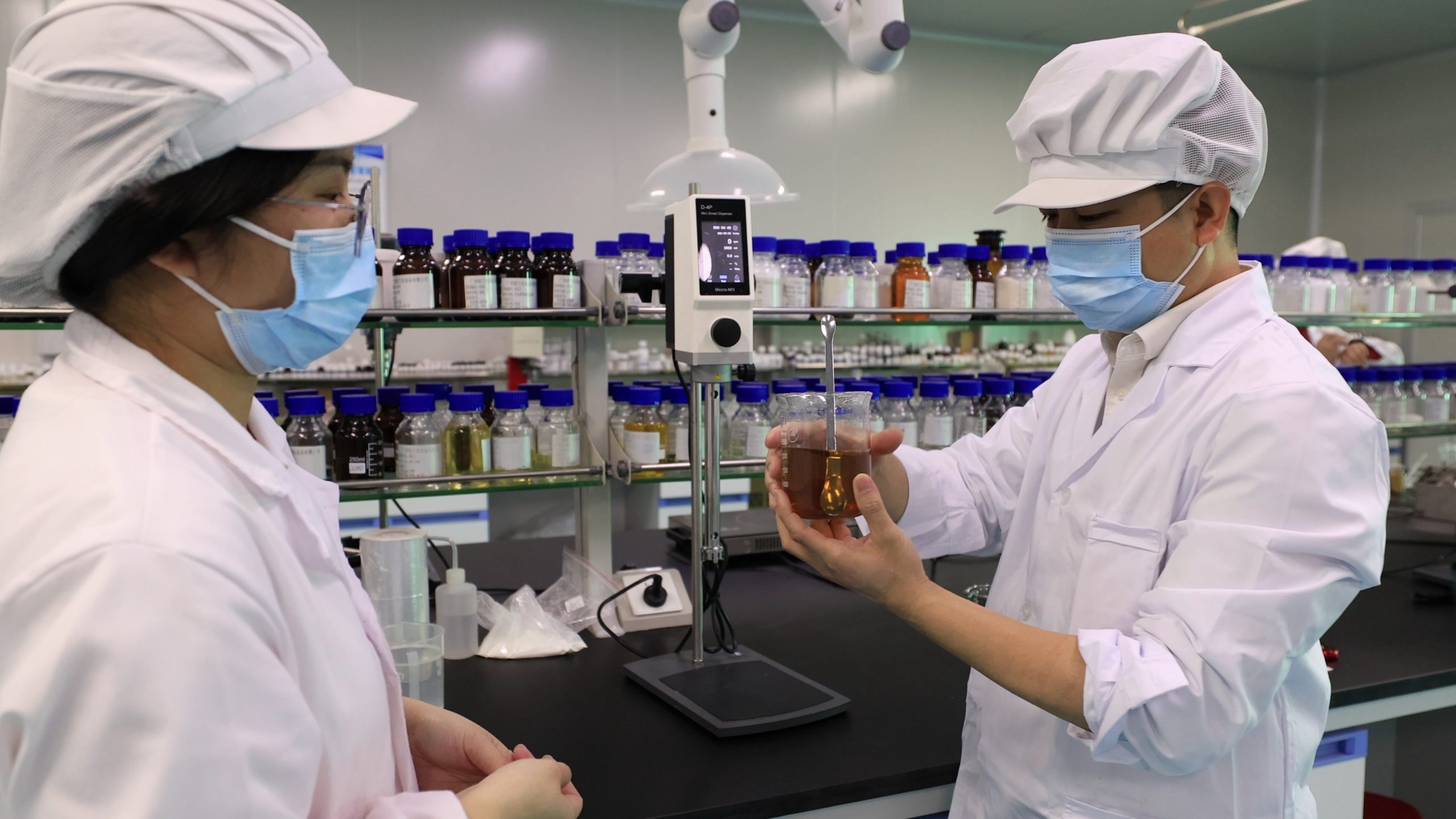
A COA can come from the factory QC team or from a third-party laboratory. Both can be useful, but they are not interchangeable.
Factory COAs are usually used for batch release and routine quality records. Third-party reports provide independent testing information and may be requested by customers or platforms.
Check who issued the document, who reviewed or signed it, the report number, and the batch connection. A formal-looking page without an issuer, date, or traceable batch number should not go straight into your quality file.
What a COA does not prove
A COA is a batch quality record, not a universal approval certificate.
It usually does not prove:
- shelf-life stability across the full expiration period
- formula and packaging compatibility
- suitability for every skin type
- market compliance in the United States or another country
- product efficacy
Those questions require separate testing, documentation, label review, and sometimes regulatory advice.
What to check when a COA arrives
- Product name matches the order
- Batch number matches the shipment
- Test items cover the main risks
- Specification and result appear together
- Units, dates, and report number are complete
- Issuer and signature are visible
- You know whether it is a factory COA or a third-party report
- Stability, compatibility, or regulatory gaps are identified before approval
If something does not match, ask the factory before you guess. A COA should make the batch easier to verify, not harder.
Tyler’s R&D team prepares batch COAs and quality documents according to the product and order requirements. When a project needs third-party testing, we confirm the test scope, timing, and cost before production so the document is ready when the shipment is ready.
For the regulatory side, read our guide to FDA registration for cosmetics.
 WhatsApp
 WeChat
Related reading
Tell us what you want to make.
Get a quote, request samples or book a short call — all in one form. Tell us your product idea, target market and estimated quantity.
Confidential by default · NDA available on request · Reply within one business day