
 By Tyler
·
7 min read ·
Factory Due Diligence, Sourcing and Supply Chain
By Tyler
·
7 min read ·
Factory Due Diligence, Sourcing and Supply Chain
Tariffs do not change what you pay the factory. They change what you pay to get the product into the country — and most first-time importers calculate that number wrong.
Let me put one thing on the table right away: whatever happens with tariffs, we can move your goods from China to any destination you name in the US, safely.
That number has a name: landed cost. If you are comparing a Chinese quote against a domestic one on unit price alone, you are comparing the wrong figures.
Your unit price is not your landed cost
Here is everything that sits between the factory invoice and your warehouse shelf:
- Goods value — what you paid the factory
- International freight — air or sea, plus insurance
- Base import duty — the standard rate for your product’s HS code
- Additional trade measures — country or product-specific tariffs applied on top of base duty
- Merchandise Processing Fee — a percentage of the goods value, with a floor and a ceiling
- Harbor Maintenance Fee — applies to ocean freight entering US ports
- Customs brokerage — a fixed fee per entry, not per unit
- Inland transport — port to your 3PL or warehouse
A factory quote covers the first line. Every line below it is yours.
This is why two brands can import the exact same product and end up with completely different margins — not because one negotiated a better unit price, but because one of them worked out those last seven lines in advance. I have been in this industry for 13 years and I know how much that matters, so when I quote, I list every one of those lines up front.
Rates change. The structure does not.
Let us be direct about something: US tariff policy on Chinese goods has moved repeatedly since 2018, and again through 2025 and 2026.
Two things decide your cost:
- The HS code your product is classified under. Cosmetic preparations usually sit in chapter 33 — 3304 for skin care, 3305 for hair, 3307 for other personal care items. That code sets your base duty rate and decides whether additional measures apply. Get one digit wrong and the landed cost on a 5,000-unit order can swing by thousands of dollars. If you are working with a manufacturer who knows the process, they will work this out for you before you order.
- Which additional measures currently cover that code and that country of origin. These are published and updated regularly. They are not something you should guess at.
If anyone gives you a flat “the tariff is X percent” without asking for your HS code first, they do not know what they are talking about.
Ask two questions of any supplier or broker who quotes you a tariff number: which HS code are you using, and which additional measures are you including? The answer tells you whether they actually know.
Do the math before you commit to a market
The calculation itself is not complicated. It is just tedious, and most brands skip it.
- Get your HS code. Ask your manufacturer what they declare. Then confirm it — with your customs broker, or with a binding ruling if the product is unusual.
- Get the current base duty rate for that code and that origin country.
- Check which additional measures apply. This changes. Check it at the time of the order, not from a blog post.
- Add the fees. MPF and HMF are small percentages, but they are real money.
- Add freight, brokerage and inland transport. These are fixed per shipment, which is why small orders carry a disproportionate penalty.
- Divide by sellable units. That is your true landed cost.
A 500-unit first order will always show a worse landed cost than a 5,000-unit order. That is not the factory’s fault. It is fixed costs spread across fewer units.
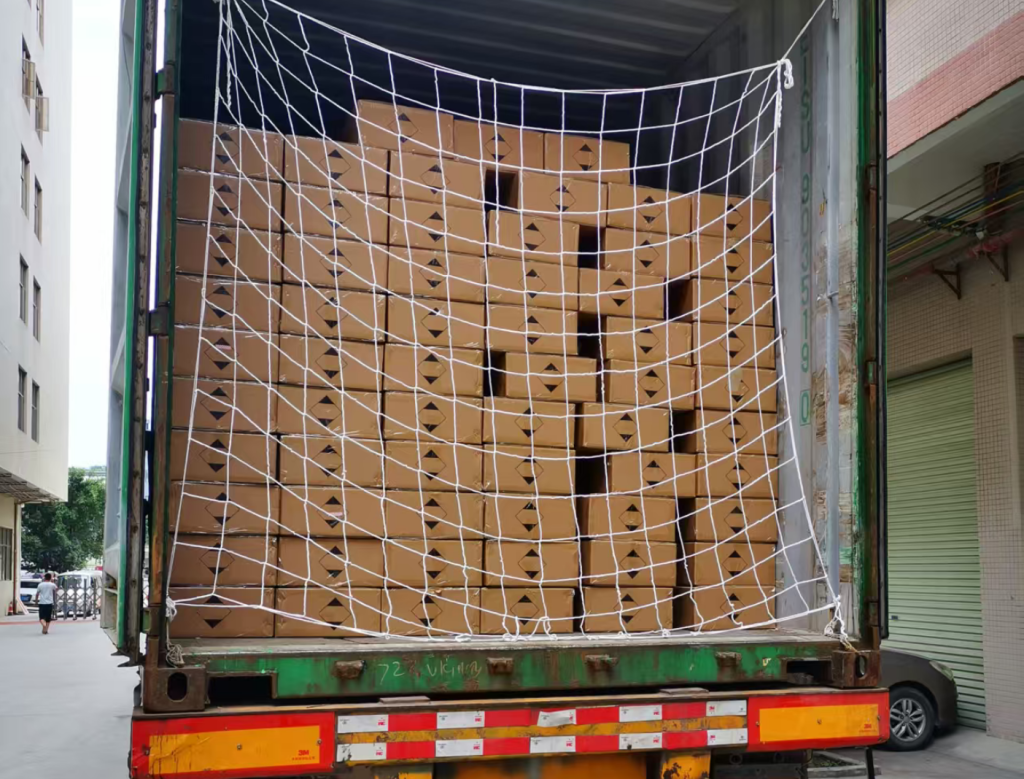
From my own experience, here are four ways to reduce your cost
None of these involve under-declaring value. That is fraud, and it ends with your goods seized and your brand blacklisted at customs.
- Verify the HS code. This is the biggest single lever, and getting it right is entirely legal. Many skincare imports are classified by habit rather than by what the product actually does. If your product is a preparation for a specific function, it may belong in a different heading than the default one. That is worth an hour of a broker’s time.
- Decide who pays the duty, and put it in the contract. Under DDP terms the seller arranges and pays import duties; under DAP the buyer does. DDP is convenient but hides the real cost inside the unit price — many brands prefer DAP so they can see and control that line themselves. Agree it before you sign.
- Look at where your packaging comes from. Dutiable value is based on the goods, and packaging often enters China as an imported input. Whether buying cartons or components domestically makes sense depends on your volumes — but in practice, most of our US clients buy their packaging in China too, because Chinese packaging pricing holds a decisive advantage even after every fee is added in.
- Plan order size against tariff exposure. If duty is a real line item, a slightly larger order can still lower your cost per unit. Run the math both ways before you default to the smallest possible first order.
What your manufacturer should already be doing
Tariff planning is a customs question, but it is also a factory question. A manufacturer who has shipped to regulated markets already knows how to produce export documentation that clears.
We have spent 13 years on herbal skincare, and we now ship to clients in 11 markets — the US, EU, UK, Australia, New Zealand, Japan, South Korea, Indonesia, the Philippines and Saudi Arabia among them. Every one of those markets has its own duty structure, its own paperwork and its own rules on cosmetic importation. That experience is why we can tell a US brand what the customs file needs to contain before the first shipment — not after the goods are already sitting at the port.
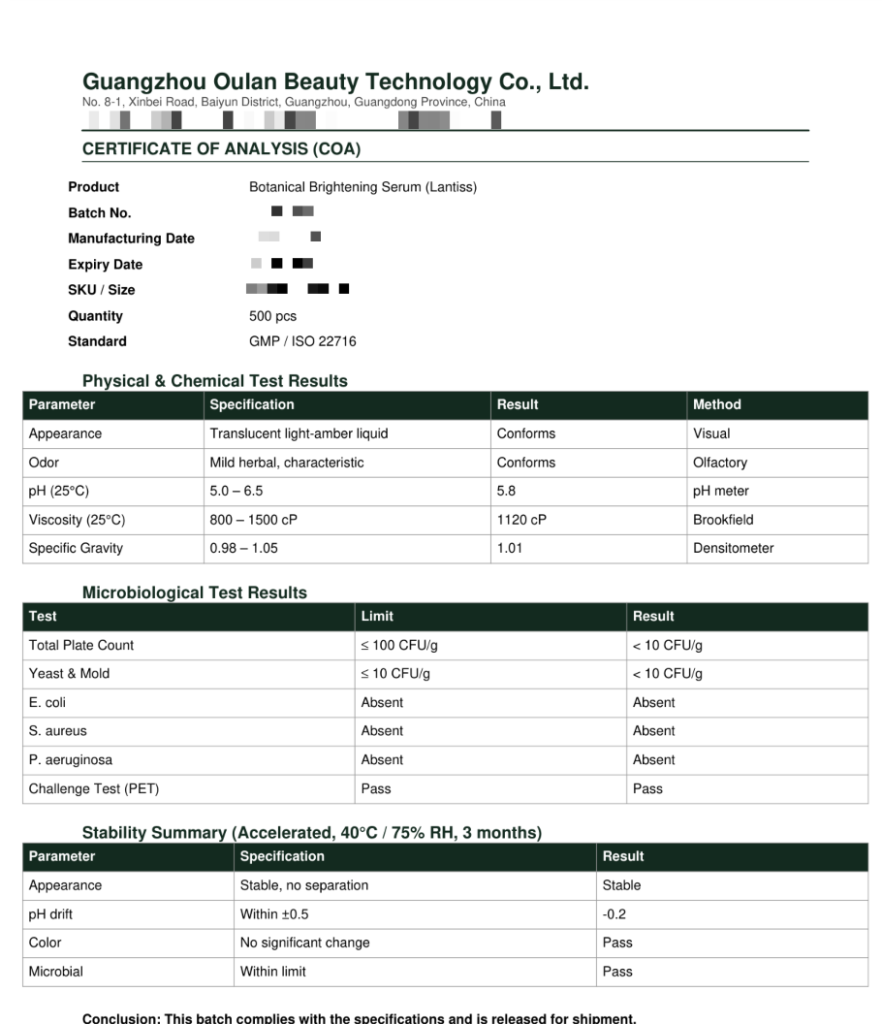
For US-bound orders, our documentation includes a commercial invoice with correct HS classification, a packing list, a certificate of origin where applicable, COA, stability data, microbiological results and batch records. We manufacture under GMP and ISO 22716, we are FDA registered, and we support MoCRA compliance files.
What to do before your first import
Tariffs are a planning problem, not a reason to avoid a market. Three steps:
- Get the HS code your manufacturer declares, and confirm it with your own broker.
- Build a landed cost model that includes duty, fees, freight and brokerage. Not just unit price.
- Decide your Incoterms before the purchase order, not after.
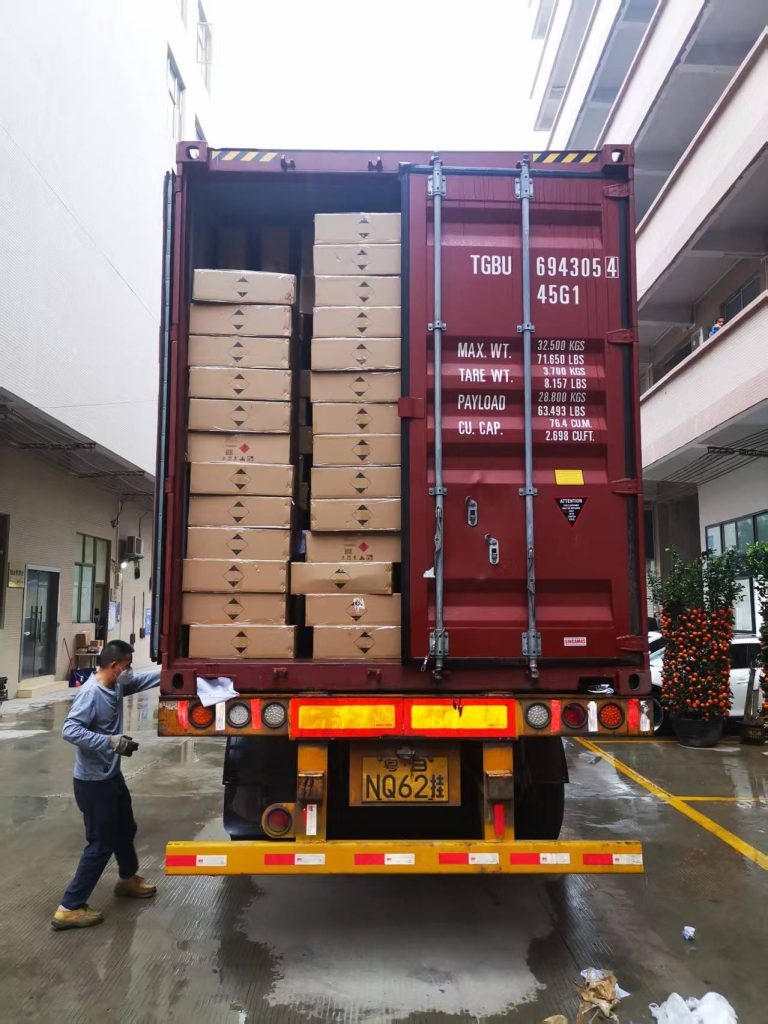
If you are choosing a manufacturing partner, ask them two things: what does your export documentation cover, and which markets have you shipped to? A factory that only sells domestically will be learning customs at your expense.
Tell us your product and your target market, and we will tell you what the customs file has to contain — and what your landed cost should look like at 500 units.
 WhatsApp
 WeChat
Related reading
Tell us what you want to make.
Get a quote, request samples or book a short call — all in one form. Tell us your product idea, target market and estimated quantity.
Confidential by default · NDA available on request · Reply within one business day