
 By Tyler
·
6 min read ·
U.S. Compliance, Labels and Claims
By Tyler
·
6 min read ·
U.S. Compliance, Labels and Claims
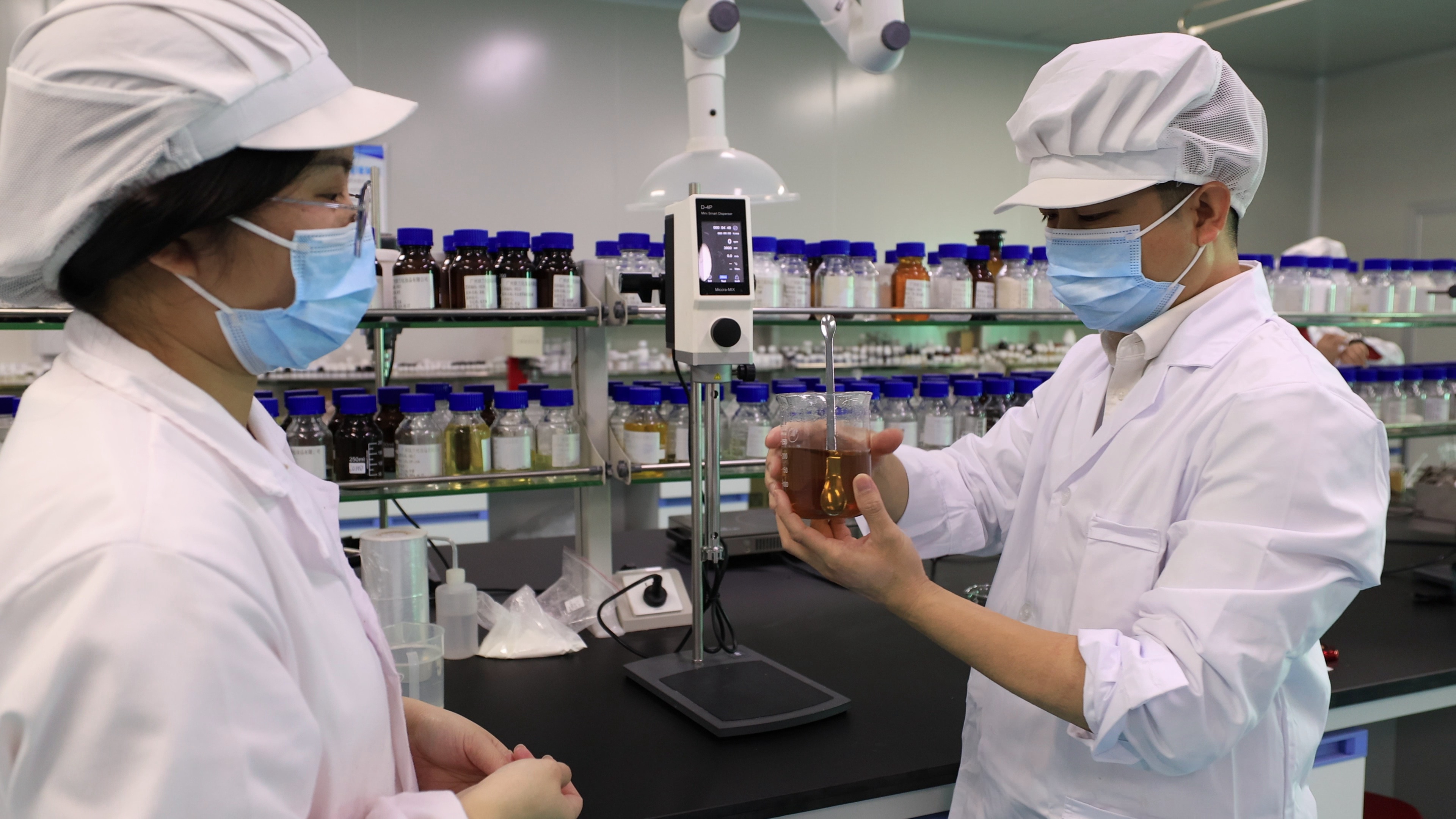
I’ve been making skincare for U.S. brands for over 13 years. Nearly every new brand I talk to opens with the same question: how long does FDA registration take?
I almost never answer it right away. Not because I’m dodging — it’s just the wrong first question. Most of the problems I see start before registration even comes up.
From experience, I ask three questions first
Whatever you’re asking about — registration, testing, labeling — I start with the same three questions:
- What is the product, exactly? Not “skincare” in general — the specific format, the claimed function, and whether it makes any drug-like or SPF claim.
- Who are you selling to? A DTC site, Amazon, or physical retail? Different channels carry different requirements.
- Do you already have English labeling? If you do not — or if the labels say something they should not — everything downstream has to be redone.
Those three answers decide which path you’re on. They don’t decide how long it takes.
What the rules actually say for cosmetics
FDA does not approve cosmetics before they go to market. That surprises almost everyone I talk to.
There is no approval to obtain before a cosmetic can be sold in the US. What FDA regulates is registration, ingredients, labeling, claims, adverse-event reporting and GMP. It does not hand out a permission slip.
Since the 2022 Modernization of Cosmetics Regulation Act (MoCRA), two things became firm requirements:
Facility registration. Facilities that manufacture or process cosmetic products for US distribution must register with FDA.
Product listing. The Responsible Person — usually the brand — must list each cosmetic product individually.
These are two separate duties, and they usually fall on different parties. We register our own facility. The brand — or its U.S. Responsible Person — handles product listing. Miss either one, and you can run into problems getting the product into the U.S.
One update worth knowing: in 2025 FDA said it does not intend to enforce the facility registration and product listing requirements until it publishes further guidance. The requirement itself is still written into MoCRA and enforcement can start at any time — so we build to the requirement, not to the discretion.
Beyond those two, a cosmetic going into the US also has to clear these:
- Ingredients. They must be declared by INCI name, and some ingredients that are perfectly legal in China are restricted or prohibited in the US.
- Labeling. Net contents, the name and address of the Responsible Person, the ingredient declaration, country of origin and any required warnings — every one of them has a format requirement.
- Claims. This is where it gets dangerous. Phrases like “reduces wrinkles” or “repairs damage” can get a product reclassified as a drug in the US — and drugs sit under an entirely different regulatory regime.
- GMP. Manufacturing has to follow good manufacturing practice. The international cosmetics standard is ISO 22716.
Saying “we are FDA registered” can be dangerous
FDA states this plainly: a registration number issued to a firm, or a product listing, does not mean FDA has approved, cleared or authorised that firm or that product.
So when someone tells you a product is “FDA certified”, a US buyer hears a red flag. At worst, it reads as a false claim.
On my own site I say FDA-registered facility and publish the verifiable FEI number — not “FDA approved”. In the US, those are two different sentences with two different meanings.
What the factory does, and what the brand does
A lot of brands assume that finding a factory with “FDA” is the end of it. It is not. The obligations are split.
- The factory handles: facility registration, GMP production, batch records, COA, stability and microbiological testing, and product documentation where required.
- The brand handles: product listing, label content and compliance, whether the claims hold up, adverse-event reporting, and the Responsible Person role in the US.
If either side is incomplete, the shipment can fail to clear. That is why I insist on aligning all of this before the first order ships.
Other product categories take a different path entirely
Everything above is about cosmetics. If you’re actually making something else, the rules are completely different — and opening with “how long does FDA take” sends you down the wrong road:
- Food. Food imported into the US generally requires the importer to file Prior Notice, and the importer may also need a Foreign Supplier Verification Program (FSVP) in place.
- Medical devices. Depending on classification, this can involve registration, listing, 510(k) clearance or UDI. None of it overlaps with cosmetics.
- Pet food. Certain ingredients or claims can bring USDA into scope as well.
So what is the right order?
Do not start with “how long does FDA take”. Start by confirming these five things:
- One — what is your product’s regulatory identity in the US? Simply put: which rulebook does it fall under? A cosmetic is regulated as a cosmetic; a drug is regulated as a drug. They are not the same rulebook. (Cosmetic / drug / something in between)
- Two — do your claims stay inside the line? Does what you say about the product go beyond what the rules allow for that kind of product?
- Three — is your English labeling compliant? One tip: go look at labels from brands that already sell well, and use them as your reference.
- Facility registration (factory) and product listing (brand) — who owns each, and are they done?
- Five — are any ingredients banned or restricted in the US? This one is easy: just ask a factory you trust. A factory that ships to the US regularly will know these rules cold.
Once those five are settled, you will know what the process actually is and how long it really takes. Get the order wrong, and you can end up holding a registration number you cannot use.
We have spent 13 years on herbal skincare and ship to clients across 11 markets, including the US, EU, UK, Australia, New Zealand, Japan, South Korea, Indonesia, the Philippines and Saudi Arabia. Every one of those markets has its own rules. That is why I ask about the path before I quote.
Tell me your product format, your target market and what labeling you already have. I will tell you what is still missing on that path — instead of quoting you a number of days.
Last reviewed: September 2026. FDA rules change. Facility registration and product listing are set out in MoCRA — for current wording, see the FDA page on registration and listing of cosmetic product facilities and products.
Related reading: How to Read a Cosmetic Certificate of Analysis.
 WhatsApp
 WeChat
Related reading
Tell us what you want to make.
Get a quote, request samples or book a short call — all in one form. Tell us your product idea, target market and estimated quantity.
Confidential by default · NDA available on request · Reply within one business day