
 By Tyler
·
11 min read ·
Product Development and Formulation
When a herbal skincare formula changes color, separates, develops sediment or loses viscosity, blaming the plant ingredient is not enough. Check the raw material specification, the formula, microbial protection, expected storage conditions and final packaging together. A fresh sample that looks right shows how it performed at that moment. It does not establish how the product will behave during shipment, storage and use.
As a brand owner, you do not need to design every laboratory test. You do need to know which formula version, raw material batch and packaging were tested, under what conditions, and what decision the results support. Without that connection, even a detailed report may tell you little about the product you intend to order.
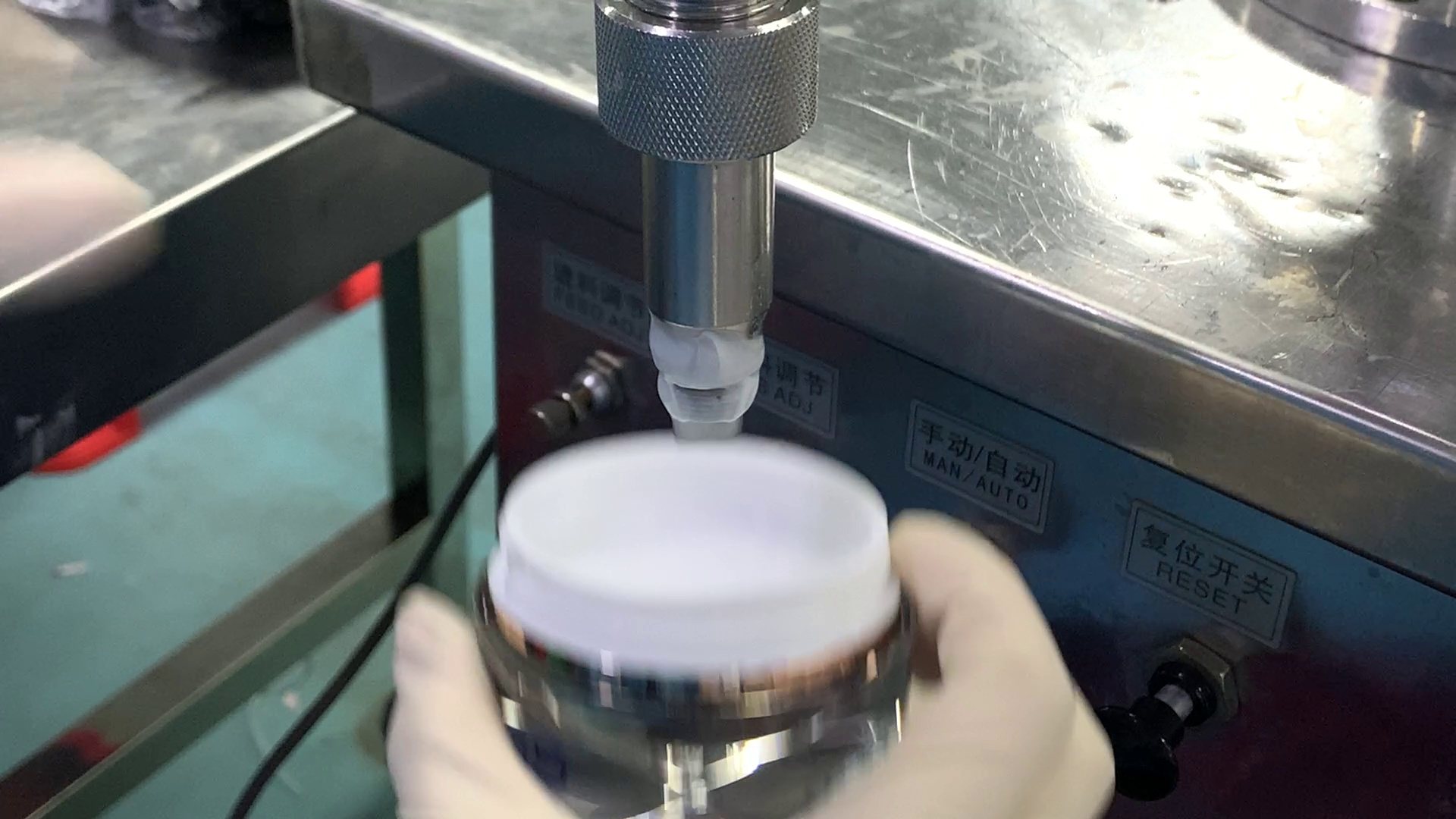
Five checks before you approve a herbal formula
Before asking whether a factory can guarantee that a product will remain unchanged for years, use these questions to define what needs confirming.
| Check | Ask the factory | What you need |
|---|---|---|
| Botanical raw materials | Has the supplier, specification or carrier changed? | Raw material information linked to the formula version |
| Formula performance | How will color, odor, pH and viscosity be assessed? | Initial observations and defined acceptance criteria |
| Microbial protection | What checks and preservative evaluations have been completed? | Evidence that identifies the actual formula and its scope |
| Sales conditions | What might happen during transport, storage and use? | An assessment plan with its assumptions stated |
| Final packaging | Were the intended bottle, pump, cap and other contact parts considered? | Results linked to the actual packaging version |
“We have made many herbal products” is useful background. It does not answer whether the conditions for this particular product have been checked.
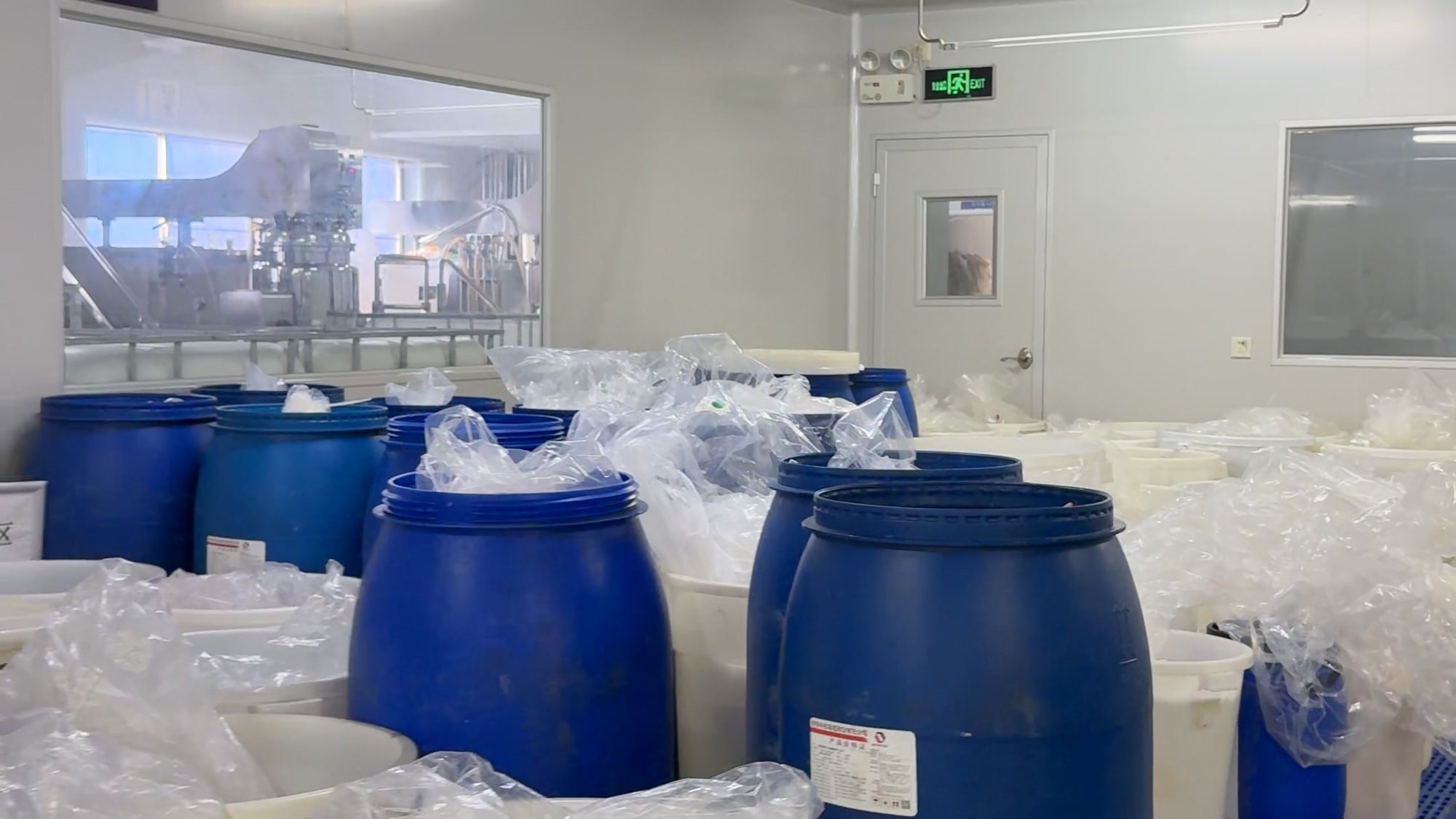
The botanical name does not identify the whole raw material
“Contains centella” or “made with ginseng extract” describes a product direction. It does not fully specify what the factory is buying.
The plant part, extraction method, carrier, concentration and other relevant specifications may matter. These details do not all belong on the retail box, but the factory should be able to trace the raw material it uses.
When a supplier changes, ask: “What differs between the old and new materials? Could that affect color, odor, solubility, formula structure or label information? How will you assess the change?” That moves the discussion further than arguing that both materials have the same plant name.
Let R&D identify which work the change affects. A different supplier or a cheaper specification does not automatically require every test to be repeated, but an unchanged name is not a reason to skip the assessment.
The records also need to connect. Ask which formula version uses each raw material document and which raw material batch went into the submitted sample. If purchasing records, samples and reports refer to different things, investigating a later change becomes difficult.
I once had two sample bottles carrying only the same client’s name. My US client was developing a centella soothing lotion and had sent extracts from two suppliers to compare. When I took the samples to R&D, I found that the records did not connect the extract specifications, formula versions and sample numbers. Both materials were called centella extract; the bottles did not show which one each contained. I stopped the project at sample approval. R&D made new samples from the two sets of raw material information and numbered each bottle separately. The client then approved and commented on samples by number. We could finally connect the feedback to the material records without repeatedly asking which version they meant. The two vaguely labeled bottles were not used as the basis for production approval.
Assess color, viscosity and sediment separately
“The product changed” describes an observation, not its cause.
Record changes in color, odor, separation, precipitation and viscosity separately. A small color difference accepted for one product is not automatically acceptable for another. Whether a change occurred and whether that change is acceptable are different questions.
If sediment appears, identify what it is, when it develops and whether it affects uniformity, dispensing or use. If the color darkens, “natural materials do that” is not a sufficient release decision.
Research on a plant-extract emulsion examines physical properties and the behavior of the studied ingredients separately. Its results do not validate your formula. It does illustrate why an unchanged appearance cannot establish that every relevant property has remained unchanged.
Agree on the assessment method before testing: the starting condition, the observations to record, acceptable changes and the findings that require investigation. Do not wait for a sample to change before deciding what “normal” means.
If a selling point depends on a particular ingredient or performance claim, confirm what evidence that claim needs. Visual inspection does not replace ingredient analysis or establish that an effect remains unchanged.
Match the assessment to where the product will be sold
A laboratory, a warehouse, a delivery vehicle and a customer’s bathroom do not expose a product to the same conditions.
Explain the intended market, shipping method, storage arrangements and expected use to the factory. R&D and quality staff can then assess which conditions the evaluation should address.
That does not mean every formula needs the same extreme test conditions. Each part of the work needs a purpose: investigating a transport risk, comparing versions or supporting a conclusion under specified storage conditions. The conclusion should stay within that purpose.
FDA’s shelf-life guidance discusses how temperature and exposure to light and air can affect cosmetics. For a buyer, the practical step is to describe the conditions your product will actually face rather than copy another product’s testing schedule.
Keep stability and microbial evidence connected to their own questions
A clear serum with no visible separation has not, for that reason alone, demonstrated adequate microbial control.
Distinguish observations of formula changes, microbial results for a particular sample and an evaluation of preservative protection. Ask what each document covers. One type of result does not silently answer the other questions.
Using botanical extracts is not a reason to remove necessary protection. If the brief excludes certain ingredients, say so during development so that R&D can assess the formula, packaging and evaluation together.
Our article on natural preservatives in skincare explains the underlying issue. Start with how the product needs to be protected, then discuss ingredients. A marketing position should not be settled first and left for R&D to justify afterward.
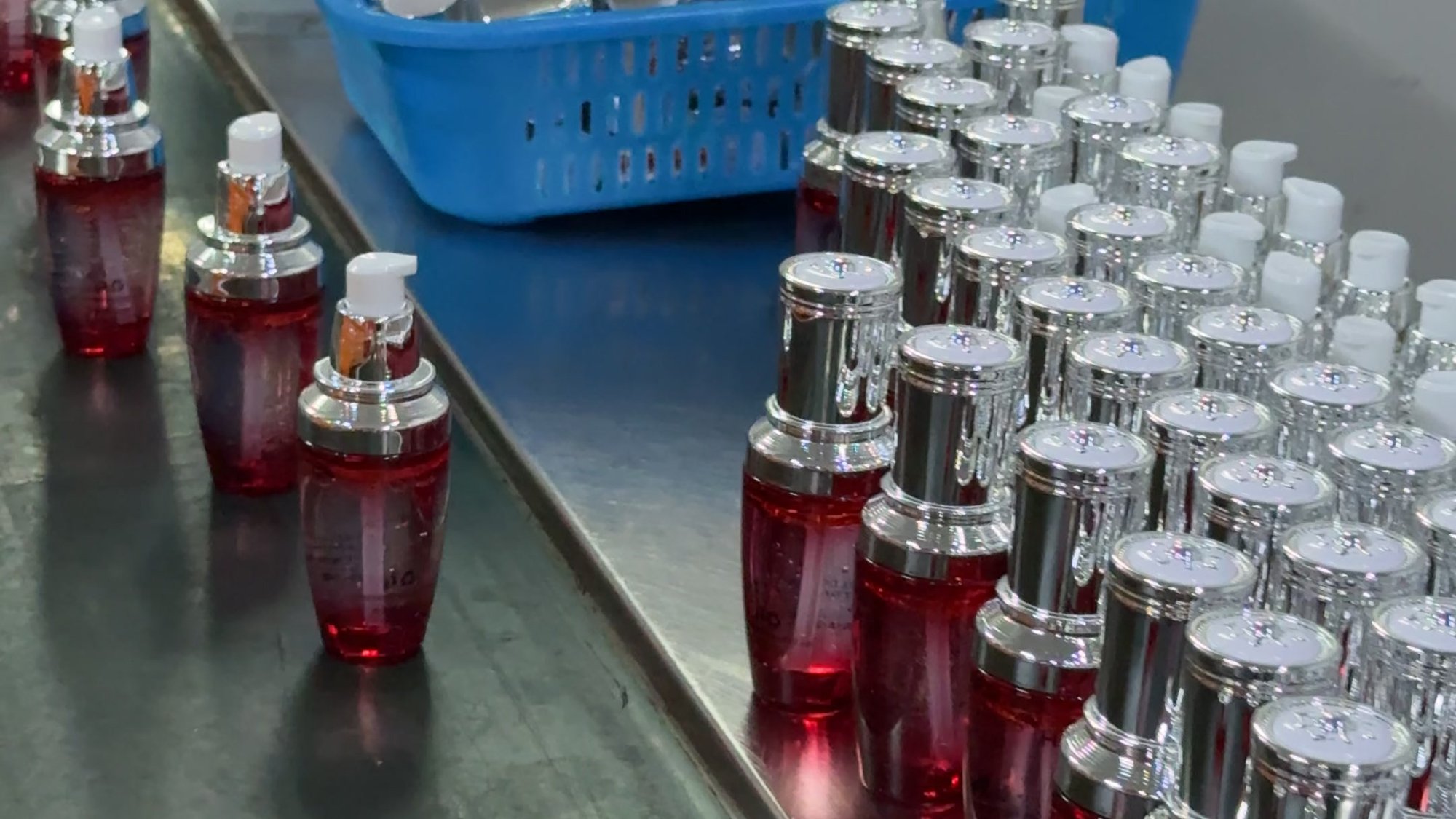
A packaging change can change what the existing results cover
An unchanged bulk formula does not mean the complete product is unchanged.
Check the bottle, pump, cap, plug and other contact components against the actual sales version. Laboratory containers have a useful role, but the factory should explain whether observations in those containers support conclusions about the retail pack.
A salesperson later told me about an Australian client’s green tea serum. The client had approved an amber pump bottle, but the packaging supplier changed the pump on the production sample. It looked similar, and the salesperson initially treated it as a small styling adjustment. QC found that the new pump’s product-contact material information was incomplete. Nobody had confirmed whether the existing evaluation covered that combination. The salesperson withdrew the purchasing request, asked the packaging supplier to restore the signed-off pump and sent the complete assembly back to the client. Purchasing resumed only after the approved bottle and pump matched the same set of records. Both sides stopped working through two conflicting pump versions.
Packaging assessment goes beyond leakage. Depending on the project, dispensing, sealing and changes involving contact materials may need attention. Where existing evidence covers part of the assessment, explain why.
See skincare packaging compatibility for this part of the work. Providing the actual packaging and its version information helps ensure that the evaluated combination is the one you plan to sell.
Read the limits behind an accelerated-test result
When a report says “pass,” I still ask three questions:
- Which sample and packaging version does it identify?
- What conditions and properties were examined?
- What decision does the conclusion support, and what work remains?
Accelerated observations help assess risk. They should not be converted, without explanation, into one shelf life that applies to every product. Read them with ongoing observations, packaging information and the product’s actual circumstances. This technical discussion of stability protocols considers the importance of designing the work around its intended use.
If the extract specification, formula or contact materials change afterward, return to the original scope. Keeping a report marked “pass” while losing track of its conditions does not preserve its usefulness.
Ask for a confirmation plan you can follow before ordering
You can make the request directly:
“Here are the formula version, botanical material information and packaging we intend to approve. The product will be sold in this market and shipped and stored in these ways. Please explain what the existing stability and microbial information covers, which differences still need assessment, and what must be completed before production or release.”
Ask for the responsible person, sample version, information needed from you and next feedback point. That gives the brand a usable basis for launch planning instead of a date with unstated assumptions.
Keep sample feedback specific. Separate color, odor, feel and dispensing observations so the team can see what an adjustment may affect. Our guide to cosmetic sample rounds explains how to organize those decisions.
FAQ
Does a slight color change mean a herbal product cannot be sold?
Not by itself. Identify the source, size and conditions of the change, then assess its effect on agreed specifications and safety considerations. Set acceptance criteria in advance rather than treating every change as a natural-material exception.
Does a sample without separation prove that stability is satisfactory?
No. It is one observation. Other relevant properties, conditions, observation periods and final packaging still matter. Microbial protection also needs appropriate supporting evidence.
Must every test be repeated after changing extract suppliers?
First compare the actual materials. Let R&D and quality staff assess the affected work. An unchanged name does not remove the need for review, and a supplier change alone does not establish that every document must be replaced.
Can the factory promise one standard shelf life first?
Ask which formula, packaging and storage conditions the recommendation covers and what supports it. A commercial target can guide development; the number the brand wants on the carton cannot establish the product’s shelf life.
Start by describing the actual product conditions
For a herbal skincare project, bring the formula goal, key botanical materials, target market and intended packaging to a discussion of Jogong Labs OEM/ODM services.
Before committing to bulk production, you should understand what has been confirmed and what still needs verification. You can also read Tyler’s background and the Jogong Labs story to learn who takes part in those discussions.
{“@context”: “https://schema.org”, “@type”: “FAQPage”, “@id”: “https://jogonglabs.com/herbal-skincare-stability/#faq”, “mainEntity”: [{“@type”: “Question”, “name”: “Does a slight color change mean a herbal product cannot be sold?”, “acceptedAnswer”: {“@type”: “Answer”, “text”: “Not by itself. Identify the source, size and conditions of the change, then assess its effect on agreed specifications and safety considerations. Set acceptance criteria in advance rather than treating every change as a natural-material exception.”}}, {“@type”: “Question”, “name”: “Does a sample without separation prove that stability is satisfactory?”, “acceptedAnswer”: {“@type”: “Answer”, “text”: “No. It is one observation. Other relevant properties, conditions, observation periods and final packaging still matter. Microbial protection also needs appropriate supporting evidence.”}}, {“@type”: “Question”, “name”: “Must every test be repeated after changing extract suppliers?”, “acceptedAnswer”: {“@type”: “Answer”, “text”: “First compare the actual materials. Let R&D and quality staff assess the affected work. An unchanged name does not remove the need for review, and a supplier change alone does not establish that every document must be replaced.”}}, {“@type”: “Question”, “name”: “Can the factory promise one standard shelf life first?”, “acceptedAnswer”: {“@type”: “Answer”, “text”: “Ask which formula, packaging and storage conditions the recommendation covers and what supports it. A commercial target can guide development; the number the brand wants on the carton cannot establish the product’s shelf life.”}}]}
For this part of the project, see Cosmetic Shelf Life and PAO: What to Confirm. Separate unopened shelf life, period after opening and channel date requirements before approving your skincare label.
 WhatsApp
 WeChat
Related reading
Tell us what you want to make.
Get a quote, request samples or book a short call — all in one form. Tell us your product idea, target market and estimated quantity.
Confidential by default · NDA available on request · Reply within one business day