
 By Tyler
·
6 min read ·
Launch, Retail Readiness and Scaling
By Tyler
·
6 min read ·
Launch, Retail Readiness and Scaling
500 units is enough to launch a skincare brand. But accept three things first.
One: the unit price at 500 will always be higher than at 5,000. That is not a factory taking advantage of you. Moulds, sampling, line setup and changeover are fixed costs, and spread across 500 units they sit much thicker than across 5,000.
Two: decide who you are selling to before you decide what to make. Most first-time founders do this in the wrong order. They pick a product, then go looking for customers.
Three: the goal of order one is not profit. It is proof. With 500 units you are testing whether the product sells and whether your pricing holds. Once you accept that, you stop spending the whole budget on the first batch.
What 500 units actually gets you
What you can do:
- One SKU – a single product
- One category
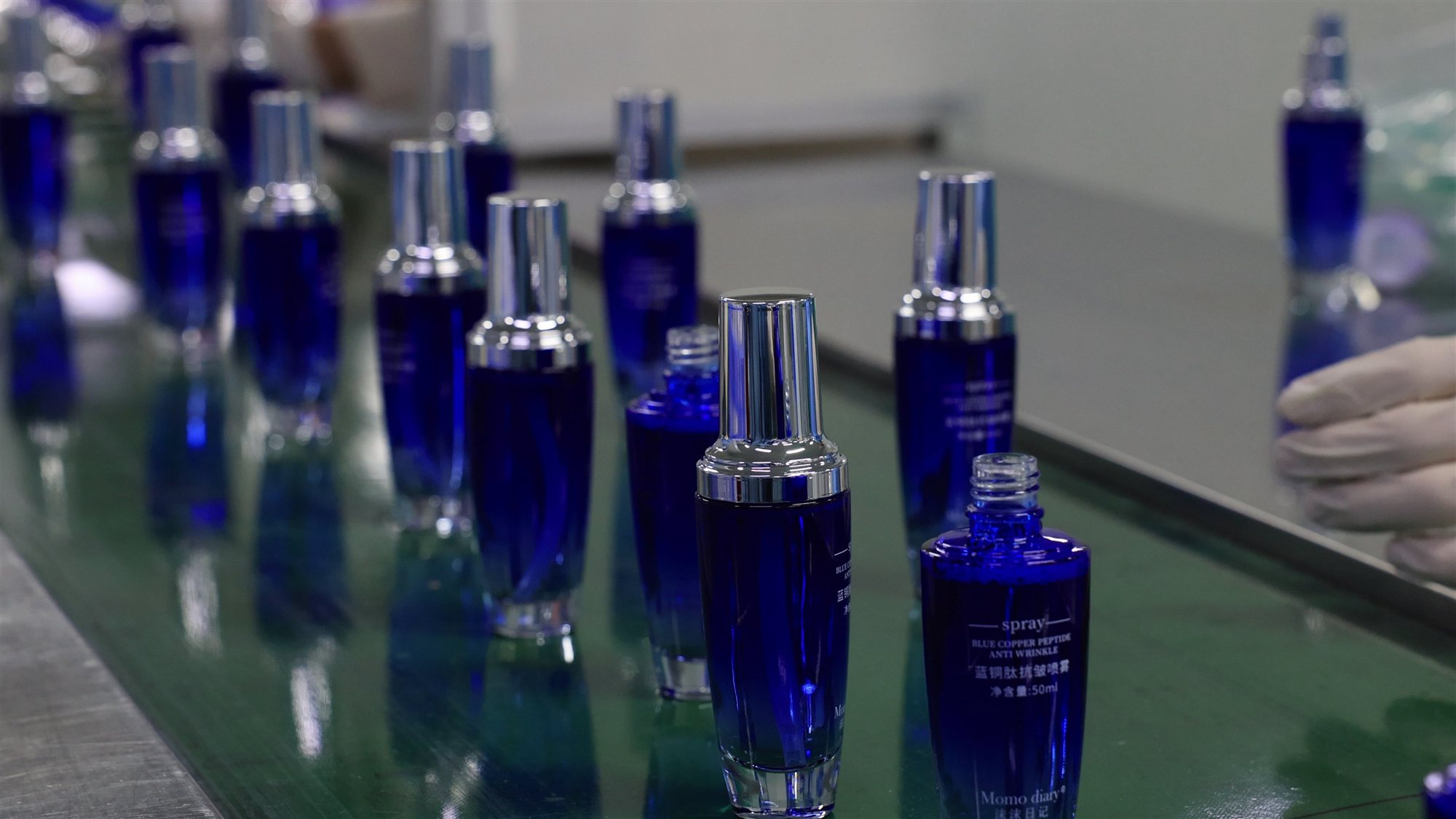
- A stock packaging option – an existing bottle, no custom mould
- Complete labelling, testing and batch documentation
What you cannot do – or should not:
- Several SKUs at once – each one carries its own fixed costs again
- Custom moulded bottles – the mould cost spread over 500 units is punishing
- Heavy packaging processes – foil stamping, UV coating, shaped boxes
Lead time: around 15 days for private label and around 25 days for custom formulation. Those are our own numbers; other factories differ.
Five decisions to make before you order
Decision 1: product format
Start with something that is easy to make, easy to sell and easy to explain.
- Serum or cream – mature formulas, plenty of packaging options
- Sheet mask – low unit price, good as an entry product, but the packaging and filling requirements are higher
- Cleanser – lowest barrier, most crowded shelf
My advice: one format, one SKU for the first run. Do not launch a full product line on your first order.
Decision 2: packaging
Use a stock bottle. Do not open a mould on your first order.
- Stock bottles: low minimums, lower unit price, easy to reorder
- Custom bottles: distinctive, but they need tooling and they take longer to reorder
If you want to control cost at 500 units, packaging is the first place to save.
Decision 3: labelling and claims
The dangerous part of a US label is not the layout. It is a claim that crosses the line.
Phrases like “reduces wrinkles”, “repairs damage” or “treats acne” can push a product into the drug category in the US, which is a completely different regulatory regime.
Decide what you are going to say before you ask a factory to build the label.
Decision 4: target market and compliance route
If the US is your first market, settle these early:
- Your product’s regulatory identity in the US – cosmetic, or does it read as a drug?
- Who files the product listing – it is usually the brand, not the factory
- The ingredient list, net contents and Responsible Person details on the English label
The factory can prepare documents. The responsibility is yours. First-time founders get this backwards more than anything else.
Decision 5: first sales channel
A DTC site, Amazon and physical retail are three different rulebooks.
- DTC site: most freedom, but you have to solve traffic yourself
- Amazon: more requirements (labels, images, compliance files), but the traffic already exists
- Retail: usually more paperwork, and slower payment
Pick one channel for the launch.
What the first 500 units actually cost
The cost of a 500-unit launch is not “unit price x 500”. These are the lines you need:
| Line | What it covers |
|---|---|
| Formula and filling | Unit price x quantity |
| Packaging | Inside the unit price, or billed separately |
| Sampling fee | Usually once – often credited against the bulk order |
| Label design | In house, or paid out |
| Testing | Stability and microbiological, the parts you cannot skip |
| Moulds and dies | Avoidable if you use a stock bottle |
| Freight | Factory to your door |
| Marketing budget | The line most people forget |
Here is a real calculation.
Say you order 500 units at 10 dollars each. That is 5,000 dollars of goods.
An order this size normally ships DDP – the forwarder handles customs at both ends and delivers. Call freight 500 dollars.
So goods delivered to you: 5,500 dollars.
That is not the whole story. You still need product photography, listings, marketing, and market research. Those costs are unpredictable.
To me, being able to spend 10,000 dollars to test one product and launch a brand is a perfectly reasonable thing to do.
The most important rule: do not put the whole budget into the first batch.
If 500 units do not sell, what you need is money left over to adjust. Not a warehouse full of stock and an empty account.
Four mistakes first-timers make
1. Launching too many SKUs. Every SKU pays its own fixed costs – sampling, testing, labelling, packaging minimums. Three SKUs can cost two and a half times one.
2. Choosing complicated packaging to look premium. A custom bottle, a foil-stamped carton and a shaped outer box can eat half your budget. At 500 units, that is the wrong call.
3. Putting claims on the label that should not be there. This is the most expensive mistake, because you discover it after the goods are made and the whole label run is waste.
4. Spending everything on stock and nothing on marketing. A good product is not the same as a product that sells. Keep a real budget for finding customers.
One real case: 1,000 bottles to 100,000
I have a client in the US who has sent me a lot of business.
In 2021 he ordered 1,000 bottles of body scrub.
About three months after that shipment, he ordered 5,000.
The following year he was ordering 100,000 at a time.
Eventually I asked him where he was selling. Amazon, he said. I looked at the listing – the volume was large.
From that one scrub he added body wash, body lotion and shampoo, and built a brand that now ranks well on Amazon in the US, positioned clearly as pure natural.
The point of this story is not how big he got. It is how he started.
1,000 bottles. One product. One channel.
How we take a 500-unit order
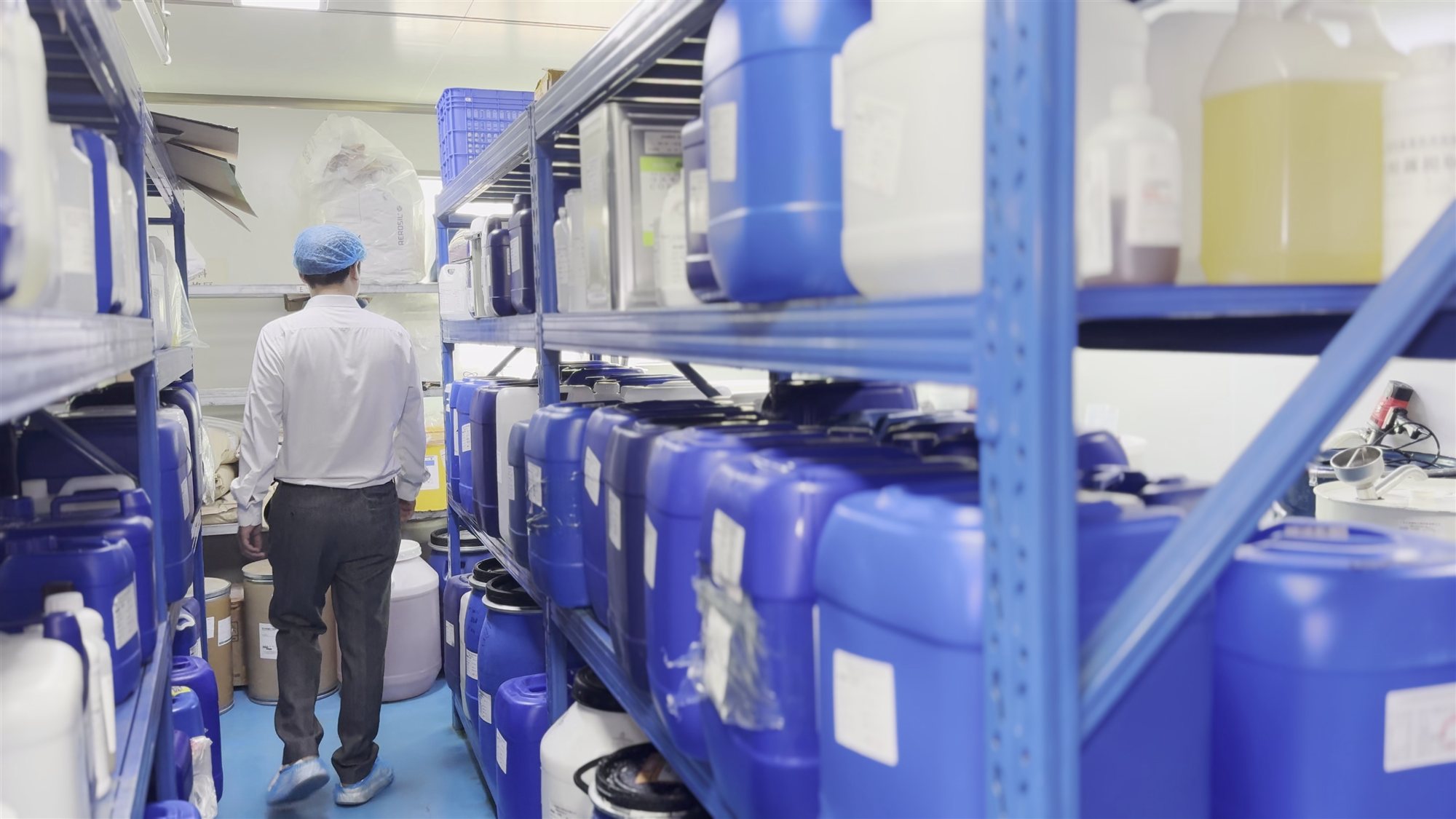
We have been making herbal skincare since 2013: 12 production lines, 180 employees, 600+ formulas.
Our MOQ is 500 units per SKU. Around 15 days for private label, around 25 days for custom formulation.
That cost calculation and those five decisions are yours to use on us. If you want to understand what is really inside a unit price, see what actually drives skincare unit cost. And before you pay anything, run through the eight questions to ask before you pay a deposit.
One last thing
500 units is not a small order. It is a cheap test.
It lets you find out, for the least money, three things: whether the product can be made, whether it sells, and whether your pricing holds.
Get those three straight, and then talk about 5,000.
Related reading: What Is Private Label Skincare? and White Label vs Private Label Cosmetics.
 WhatsApp
 WeChat
Tell us what you want to make.
Get a quote, request samples or book a short call — all in one form. Tell us your product idea, target market and estimated quantity.
Confidential by default · NDA available on request · Reply within one business day