
 By Tyler
·
6 min read ·
Product Development and Formulation
By Tyler
·
6 min read ·
Product Development and Formulation
The hardest part of a botanical skincare brief is not the extract. It is the preservative system. A plant formula carries bacteria, shifts pH, and fights itself. You cannot fix that by leaving preservatives out.
We have spent 13 years on herbal skincare, and we tell every US founder the same thing up front: the vast majority of products need a preservative. The brands that skip one do not get a slightly worse product. They get a disaster.
Botanical formulas are harder to preserve than synthetic ones
A botanical formula is more work to keep stable than a synthetic one. A synthetic formula is predictable. A botanical one is not, and there are three reasons why.
- Plant extracts bring their own bacteria. Herbs are grown in soil, harvested, dried, and handled before they reach the lab. Every one of those steps can add microbial load. A powder or extract that passes one lot can fail the next.
- The pH is hard to hold. Many preservatives only work in a narrow pH window. Botanical actives often sit outside that window, which weakens common systems.
- Ingredients fight each other. Extracts, emulsifiers, and preservatives can inactivate each other. A system that works in a lotion can die in a serum because one plant extract chelates or binds the molecule that was supposed to protect it.
This is why we do not treat preservation as an add-on at the end. It is designed into the formula from day one, before the first sample is ever poured.
What “no preservatives” actually means
Most clean-beauty claims are not what the label suggests. “Preservative-free” usually means “free of a few specific preservatives,” not free of everything.
A product that truly needs no preservative has to meet one of two conditions. It is nearly anhydrous with very low water activity, so microbes cannot grow. Or it is filled under sterile conditions and meant to be used within a short window after opening.
Water is the enemy. If your formula contains water, it feeds microbes. A water-based serum or lotion without a preservative will spoil, and we have watched exactly how fast that happens.
Here is a real contamination timeline we have seen on unpreserved product:
- Day 2: flocs start to appear in the liquid
- Week 1: the texture thickens
- Month 1: it starts to smell
A client who receives a batch like this loses the entire order, and their trust in you along with it. The cost of a preservative is nothing next to that. No founder should carry that risk to save a few cents per unit.
We choose plant-derived preservatives, and we do not pretend they are free
We generally use plant-derived preservative systems. They are friendlier to a clean-beauty label, and they still have to pass a challenge test.
The honest trade-off is this: cheap systems pass a micro test but feel worse on skin and smell worse in the jar. A better system costs more and asks more of the formula. It may shift the color slightly, or narrow the pH range you can work in.
We tell clients this before they commit, because hiding it always comes back later. A preservative is not a cosmetic choice. It is the part of the formula that decides whether your product survives on the shelf.
We had a serum for a client in Russia that had run for over a decade across thousands of batches. Lab tests were always clean. Then the client said the product did nothing.
It took us a long time to find it. In a Russian winter, the temperature drops below -20°C. The saponin actives crystallized in the cold — the ingredient dropped out of the formula instead of staying dissolved, so it never reached the skin. The formula had not failed. It just could not deliver.
We built a delivery system for that market where the protective layer opens on contact with skin. That one case taught us something we repeat to every client: the same formula can be two completely different products in two different climates.
Packaging decides how long your preservative has to last
The package is half the preservative system. An airless pump and a wide-mouth jar carry completely different contamination risk, because they meet air and fingers in completely different ways.
| Package | Air and finger contact | Contamination risk after opening |
|---|---|---|
| Airless pump | Minimal | Low |
| Pump bottle | Low to moderate | Moderate |
| Dropper | Moderate | Moderate to high |
| Wide-mouth jar | High | High |
If you want a lighter preservative load, put the formula in an airless pump. If your brand needs a jar for the ritual and the shelf appeal, the preservative system has to carry more weight. There is no way around that.
We raise this question on the first call, because it changes the formula. Two identical creams in different packages are two different preservation problems.
How we build a preservative system for a US brand
If you are still deciding which manufacturing route fits your stage, see our three service models. A preservative decision is a formula decision, not a marketing one, so it has to happen before the first sample is made.
When you brief us, we ask what the product is, what pH it needs, what package it ships in, and what claims the label has to make. Then our chemists pick the system that survives that combination and still passes a challenge test.
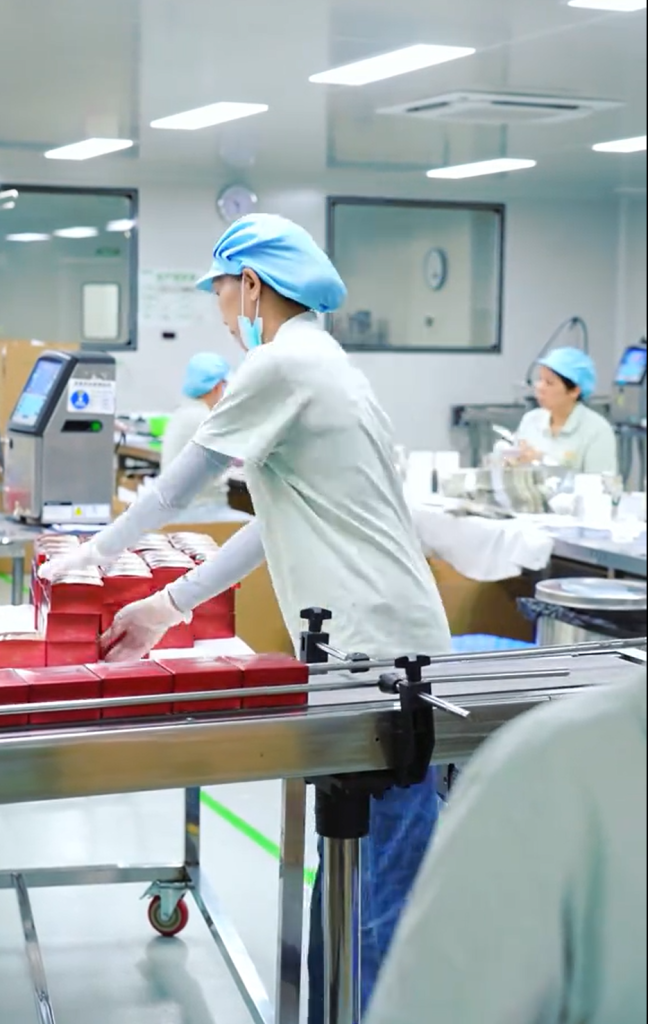
We manufacture under GMP and ISO 22716 (see private label / OEM or custom formulation / ODM), we are FDA registered, and we support MoCRA compliance files. Every batch leaves with a COA, stability data, micro results, and a batch record. Private label starts at 500 units per SKU with a 15-day turnaround, or we build a custom formula from your brief in about 25 days.
If you are choosing between natural preservatives and a formula that actually lasts, do not choose. Get a manufacturer who knows how to do both. Tell us your product, your pH, and your packaging, and we will tell you what the preservative system has to be.
 WhatsApp
 WeChat
Related reading
Tell us what you want to make.
Get a quote, request samples or book a short call — all in one form. Tell us your product idea, target market and estimated quantity.
Confidential by default · NDA available on request · Reply within one business day