
 By Tyler
·
8 min read ·
Cost, MOQ, Lead Time and Commercial Terms
By Tyler
·
8 min read ·
Cost, MOQ, Lead Time and Commercial Terms
Before you send a deposit, get written answers to the eight questions below. Email or chat is fine. Verbal is not.
If you cannot get answers, wait.
The reason is simple. Once the money leaves your account, the balance of power shifts. Any one of those eight answers being vague can turn into a dispute you cannot settle from the other side of the world.
One honest note from my side. When a deposit lands in our account, the pressure actually moves to me. I do not want a first order to go badly, so I pay more attention to it, not less.
What a deposit actually buys
Most people think a deposit is a prepayment. It is not.
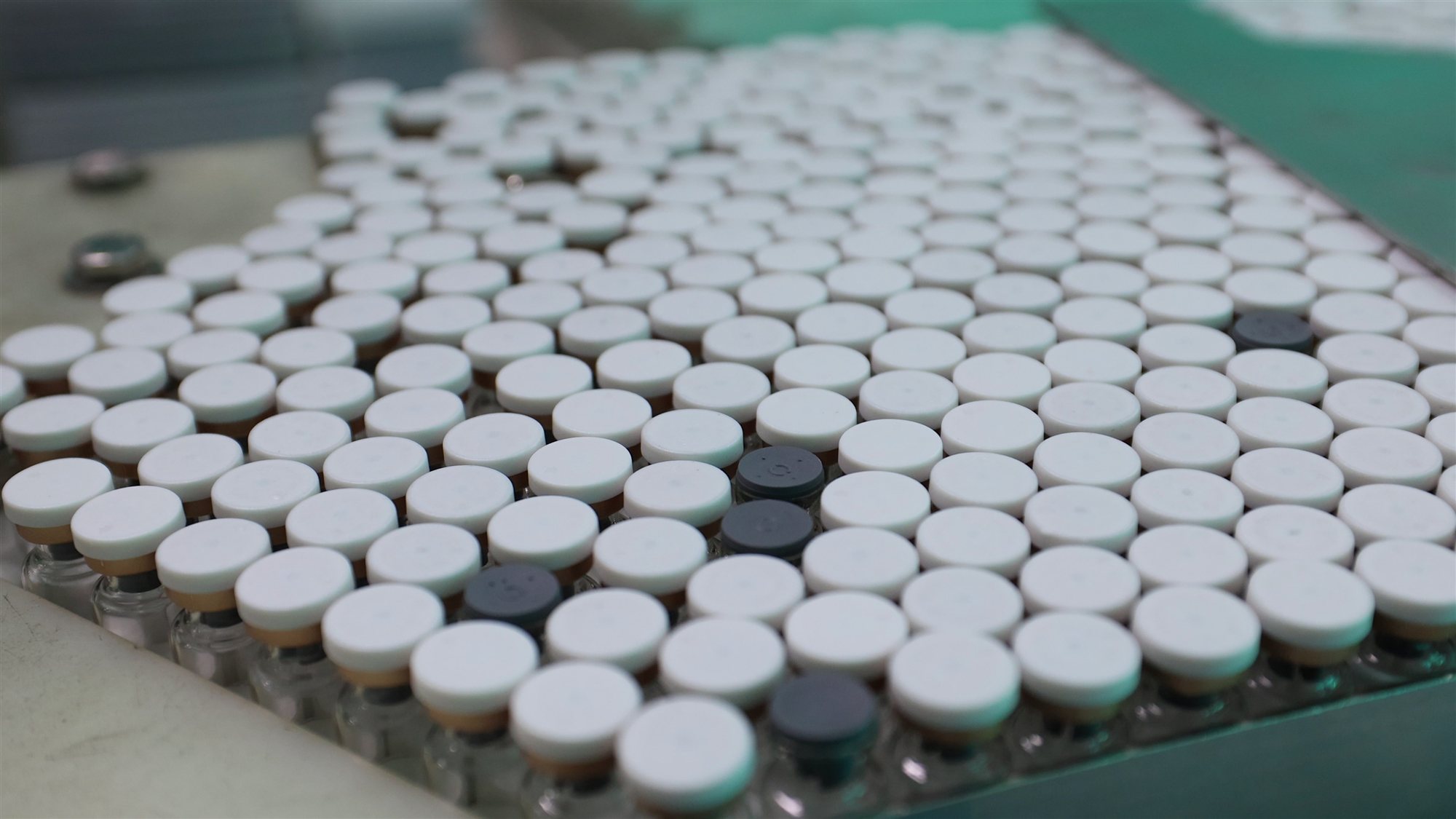
A deposit buys your slot. It is what lets the factory put your order into the production schedule, order your packaging and hold emulsifying time for your formula.
That explains two things people find strange.
First, why factories usually will not refund a deposit.
Your slot is held. On that date, the line, the staff and the raw materials are reserved for you. If you walk away, that slot cannot be refilled. It works the same way as holding a table at a restaurant.
Second, why some products carry a higher deposit.
Think about what the factory has to pay for before production starts. If we are sourcing your packaging, packaging can be around 80% of the product’s value, and Chinese packaging suppliers usually want 50% up front themselves. Some premium raw materials are settled in cash. So when a factory asks for a bigger deposit on one particular product, that is usually the reason. It is not a markup.
Eight questions to ask before you pay
1. How much is the deposit, and when is the balance due?
A deposit plus a balance before shipment is the common structure, but the numbers vary.
In practice it usually lands between 30% and 50%. Products with expensive packaging or premium raw materials often go to 50%, sometimes higher.
Get in writing: the deposit percentage, the exact point where the balance is due (before shipment, against the bill of lading, or after arrival), and what happens if a payment runs late.
2. Which production slot does this deposit lock, and when does production start?
This is the question people skip, and it matters most.
The most common trap with a cheap quote is no slot at all. The money is taken, and your order keeps sliding behind other people’s.
Get in writing: the week your order goes on the line, the expected ship date, and whether that date goes into the contract.
3. What does the quote include, and what does it not?
A low price usually hides in the lines that are not on the quote.
Ask about each one: sampling, packaging, testing (stability and microbiological), inspection, freight, tooling and customs clearance. Who pays for it.
4. If I change something mid-order, what happens to price and lead time?
Formula, packaging, quantity, labels. Almost every brand changes at least one of these.
One thing worth knowing. Very large factories, especially the ones that are now publicly listed, are expensive to change. If your product is not settled yet, I would not point you at those factories. Their flexibility is poor.
A normal factory tries to keep your loss small. If a label needs changing, they pull the old labels off and re-apply. That is the difference.
Agree the rules up front. It is far cheaper than arguing later.
5. What happens if part of the batch is defective?
Get four things straight: what standard decides it, which document that standard lives in, who pays for rework, who pays the freight, and what makes a batch fail completely.
6. If the order runs late, how will I be told?
Do not ask whether it will be late. Nobody can promise that. Ask how you will be told.
Get in writing: who contacts you, how far in advance, and what the process is.
7. Who is the contracting party, and do the documents match?
Put three documents side by side: the contract, the invoice and the COA (certificate of analysis). Compare the full company names.
It is common in China for these to differ. One entity manufactures, another exports and issues invoices. That is a normal structure, not a warning sign.
But whoever you are dealing with has to be able to explain the relationship, and the explanation should stay the same when you ask again.
8. Which account am I paying into?
Get this one wrong and the first seven answers do not matter.
The account holder name must match the party you signed with.
One note on this. That rule matters most for large orders. If your order is small, paying into a personal account is normal here.
China is strict about this. If you sue, it becomes a criminal case and the person can go to prison. That is why you almost never hear of a brand paying a Chinese factory and getting nothing back.
Something that matters more than the contract: the approved sample
A contract locks the terms. An approved sample locks the physical product.
Before you pay, try to settle three things:
- Sample approval – keep one sample on each side, and write down that this is the reference
- Packaging approval – the actual bottle, pump and carton, or clear photos of them
- Artwork approval – every word on the label, including the ingredient list, net contents and warnings
The problems that cost the most are rarely about bulk quality. They are about “I thought you knew”.
One round of approval saves weeks.
Four situations where you should wait
1. You are being rushed. “Pay today or lose the slot.” A factory with a full schedule does not need to push you like that.
2. The account does not match. The contract is company A, the payment goes to company B, or to an individual.
3. They will not show you the workshop. Even a live video walk-through gets deflected.
4. Everything is possible. Any change, any date, any quantity, all agreed instantly, with no cost attached.
The fourth one is the easiest to miss. A real factory will tell you “we cannot do that”, or “we can, but it adds this much money and this many days”.
Here is one I remember. In March this year, a US brand found me on social media and added me on WhatsApp. He asked a lot of questions, we got along well, and we were close to an order fairly quickly.
Then he asked: can you show me that you are a factory?
I answered with a question: are you free for a video call right now?
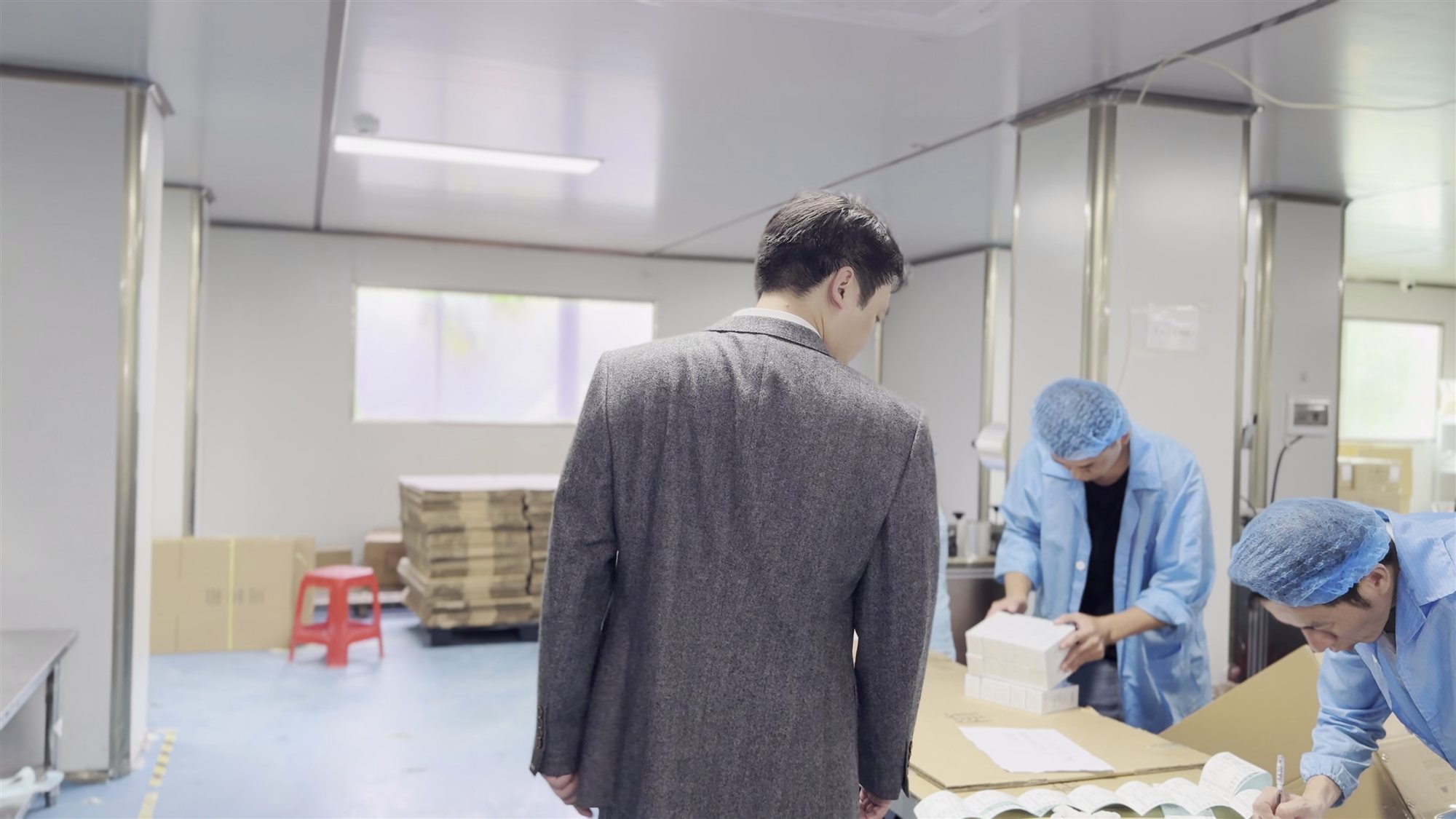
He was. I happened to be at the factory that day, so I walked out of the office with my phone, through the workshop, and explained how his product would actually be made – where it gets mixed, which line it runs on, what the packaging looks like.
That call closed it. Not because of what I said, but because he could see where his money was going.
A message you can copy and send
If you would rather not ask one by one, send this:
Before I pay a deposit, I would like written answers to a few things:
1. What is the deposit percentage, and when is the balance due?
2. Which week’s production slot does this order lock, and when will it ship? Can that date go into the contract?
3. What does the quote include, and what does it not include – sampling, packaging, testing, freight, customs?
4. If we change the formula, packaging or quantity mid-order, how do price and lead time change?
5. What is the standard for defective goods, who pays for rework, and who pays the freight?
6. If the order runs late, who tells me and when, and what is the process?
7. What are the full company names on the contract, the invoice and the COA?
8. What is the account holder name, and does it match the contracting party?
Those eight questions should not take a real factory more than ten minutes. If they cannot answer them, or keep circling, that is your answer.
How we get asked
We have been making herbal skincare since 2013: 12 production lines, 180 employees, 600+ formulas. Minimum order 500 units per SKU, around 15 days for private label and around 25 days for custom formulation.
Those eight questions are all fair game. Ask us any of them.
If you are about to pay a deposit
Do one thing first. Send those eight questions, and wait for written answers.
If they come back and everything lines up, pay. If they do not, wait. A good factory is not afraid of those questions. Being afraid of them is the answer.
Related: For a full breakdown of deposits, balance payments, and letters of credit, read Chinese Manufacturer Payment Terms: Deposits and Balance.
 WhatsApp
 WeChat
Related reading
Tell us what you want to make.
Get a quote, request samples or book a short call — all in one form. Tell us your product idea, target market and estimated quantity.
Confidential by default · NDA available on request · Reply within one business day